















How to Choose Mobile Accessories That Actually Fit Daily Use

A smartphone handles most daily tasks on its own. What determines how convenient it actually feels to use, though, usually comes down to what's plugged into it or carried alongside it. A charger reached for several times a day. A cable moved between a desk at work and a bedside table at home. Earbuds worn on the metro or during a long drive. A stand propped next to a laptop during video calls. These small additions end up shaping the experience more than most people expect.
That's the space mobile accessories from T4G Store sit in. Price and spec count don't tell the whole story. What matters more is whether a device actually holds up under regular use and fits into how someone already lives with their phone. Shelves are full of options these days, so picking the right one takes a bit more than checking the box to see if it fits.
Why the USB Charging Cable Deserves More Thought Than It Gets
Buyers often grab a USB charging cable based on connector type alone. That's only part of the picture. Before buying a new one, a few things are worth a second look: connector type on both ends, the charging speed and power output it actually supports, whether data transfer matters for the intended use, length that suits where it'll be used, how sturdy the connector housing feels, and whether it's genuinely compatible with the phone and adapter in hand.
A cable also needs to keep pace with the charging speed and power output of both the phone and the laptop or mobile chargers it's paired with. Anyone who moves files between a phone and a laptop will care about data transfer speed too. Then there's length, how the connector is built, and how much flexing it can take before it starts fraying near the plug. A cable can technically plug into a phone and still be the wrong fit for how that person charges day to day. A quick check of the specs before checkout saves that headache later.
Not Every Accessory Solves the Same Problem
How a person uses their phone shapes what they actually need. A desk-bound worker often gets more mileage out of a stand and a reliable charging setup than anything else. Someone constantly on the move might care more about a power bank and gear light enough to toss in a bag. Anyone spending hours on calls or meetings tends to put audio quality first.
Most of this comes down to noticing what keeps going wrong day after day, instead of ticking boxes on a checklist. If a phone is dead by 3pm most days, the fix is more charging capacity with a fast charger, not a new case. If someone's constantly rewatching videos on a cracked screen from an awkward angle, a stand or a better pair of earbuds probably solves more than a spec upgrade would. Paying attention to those small daily annoyances usually points straight to the right accessory.
Speakers, Earphones, and Headsets Deserve Their Own Look
Audio gear rarely gets picked with the same care as a charger, yet it often sees just as much daily use. A pair of earphones might get worn through an entire commute, a headset through back-to-back calls, a speaker through a whole evening at home. What matters here isn't loudness or a brand name on the box. Fit counts for earphones worn for hours at a stretch. Mic clarity counts for anyone stuck on calls all day. Battery life and sound balance count for a speaker that moves between rooms. The right pick usually comes down to where the sound is actually needed. Anyone ready to build out their setup can order phone accessories online through T4G Store's collection of speakers, earphones, and headsets.
What to Check Before Buying
First, one must assess that the product really fits with the device for which it is intended and not make the assumption it will do so just because it looks like a product that has already been purchased. Beyond that, the numbers behind the product are worth a glance too. Charging output, storage, and which standards it supports can differ quite a bit even when two items look the same in a photo. Build quality tends to be the aspect people are most quick to skip over, but if the cable or charger gets handled every day, the condition of these parts will be one of the first signs that the quality has started wearing down.
When it comes to electrical stuff like a charger or a power bank, getting the clear technical and safety details is more important than the product description which is just meant to be catchy while looking to buy mobile accessories online. One thing you should check quite quickly if the item is going to be used on a daily basis is the warranty. Past that, it really just comes down to buying for what will actually get used, not for a feature that sounds good but never gets touched.
None of this is complicated, but it becomes genuinely useful once two similar products are being weighed against each other. Cost alone doesn't tell you much either way. Something inexpensive can still be well made, and something expensive can still be a poor match for how it'll actually be used. T4G Store keeps these specifics listed on its product pages, so that kind of comparison doesn't require much guesswork before checkout.
The Best Mobile Accessories Depend on the Person Using Them
There isn't really one "best" answer, since it depends entirely on who's buying. A student running between classes and a commute mostly needs something dependable to charge with and a decent pair of earphones. Someone splitting their week across different locations tends to reach for a power bank, a charger that handles more than one device, and a compact stand for calls. A traveller tends to care more about portability and battery capacity than almost anything else. T4G Store is definitely the answer for the reliable and original mobile accessories that are best suited for your needs.
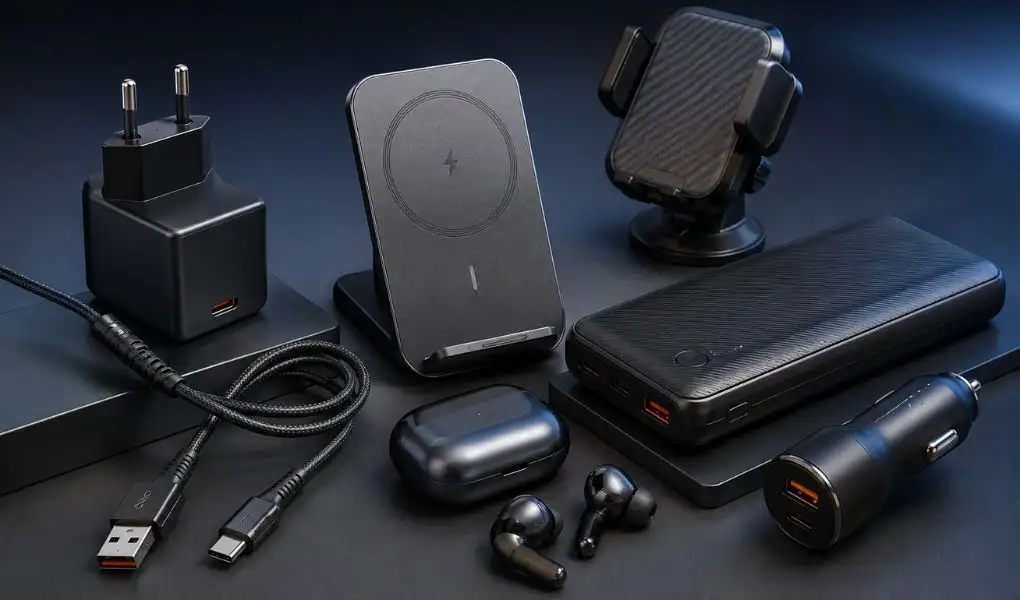
A few categories come up again and again: power accessories such as chargers, cables, wireless pads, and power banks, each suited to a different charging scenario; audio accessories, mainly earbuds and headphones, for calls, music, and meetings; protection like cases and screen covers that cut down on everyday drops and scratches; mounting gear such as stands and car mounts that make navigation and hands-free calls less awkward; and connectivity accessories, adapters and hubs mostly, for whenever a phone needs to talk to another device.
None of this is really about owning a lot of accessories versus owning few. It's about owning the ones that solve an actual problem instead of collecting things that end up buried in a drawer within a month.
Durability Matters More With Everyday Accessories
Something used once a week wears differently than something plugged and unplugged five or six times a day. USB charging cable makes this obvious pretty quickly, since the connector end takes the brunt of repeated bending, and that shows up in performance eventually. Earbuds tossed loose into a pocket wear out faster than ones kept in a case. A power bank hauled around during travel takes a beating that one sitting on a desk never will.
For anything used constantly, durability deserves as much attention as the spec sheet, maybe more. Storage habits play a role too. Even how a cable gets stored matters. One twisted into a tight knot each night will wear out faster than one left loosely coiled in a pouch, and small habits like that add up over time to decide how long the gear actually lasts.
A More Practical Way to Build an Accessory Setup
There's no rule saying everything has to be bought at once. Starting with whatever solves the most frequent problem tends to work out better in practice. A reasonable starting point is a dependable charger paired with basic phone protection, with everything else added later as actual needs come up for other device or smartphone gadgets. Someone who travels a lot will probably add a power bank eventually. Someone working mostly from home might end up reaching for a stand or a wireless pad instead.
The Better Accessory Is Usually the More Suitable One
It's easy to write off phone accessories as an afterthought, but plenty of them get picked up and used every single day, which is exactly why fit and reliability end up mattering more than packaging or a long spec sheet. A cable that actually matches the setup makes charging one less thing to think about. Decent earbuds change how calls and music actually sound. Even something as small as a stand can quietly take one recurring annoyance out of the day.
None of that means chasing whatever just launched. It's closer to figuring out what the phone genuinely needs, then choosing accessories that cover that without adding anything extra on top.
Key Takeaways
- Fit, reliability, and build quality matter more than price tags or long feature lists in mobile accessories.
- A charging cable is worth checking for connector type, supported charging speed, data transfer, length, and how sturdy the connector housing feels.
- Daily habits, not a generic checklist, should drive which accessory gets bought first.
- Power, audio, protection, mounting, and connectivity accessories each solve different everyday problems.
- Accessories used daily wear faster, so handling and storage habits matter as much as the specs.
- Building a setup gradually, starting with the most common frustration, beats buying everything at once.
Anyone putting together a setup like this can browse the mobile accessories at T4G Store, where cables, power banks, audio gear, and stands are laid out in a way that makes comparing options simple.
FAQs
Check compatibility, charging requirements, build quality, intended use, and the features you actually need before buying.
Consider the connector type, charging speed, power support, data transfer capability, length, and durability of the cable.
Yes, provided the charger is compatible with your smartphone and meets the required charging and safety standards.
Compatible accessories work properly with your device and help avoid issues such as slow charging, poor connectivity, or limited functionality.
Chargers, USB cables, power banks, earbuds, phone cases, screen protectors, stands, and car mounts can all be useful depending on your routine.
Store cables loosely, avoid excessive bending, keep electronics protected from moisture, and use cases or pouches when carrying them around.
Quality and compatibility are generally more important than price alone, especially for accessories such as chargers, cables, and power banks that are used frequently.


